The Future of Banking in the Aftermath of Economic Collapse
4 December 2025
By the flickering torch of financial ruin, what future does banking hold? Let’s take a walk through the ashes and find the green shoot of rebirth.*
A Prelude: When the System Cracks
We've all felt it—those tremors shaking the foundations of economies that once seemed indestructible. Banks shut their doors, digital wallets paused mid-transaction, and trust—oh, trust—evaporated like morning mist. After the collapse, banking isn't just about money anymore. It's about rebuilding something sacred: confidence.But here's the thing. Out of collapse springs creation. Like a forest scorched by fire, new life fights to rise from the charred earth. And in this rebirth, banking is changing… dramatically.
The Collapse That Changed Everything
Remember 2008? Yeah, that was child’s play compared to the economic implosions we've witnessed since. When towering institutions fall like dominoes, and currencies struggle like fish on dry land, the system breaks. It's not just banks going bankrupt—it’s the entire architecture of global finance crumbling at the edges.In came inflation like a thief in the night, debt like a fog we couldn’t escape, and digital currencies like wild cards in a crooked deck.
So, where the heck do we go from here?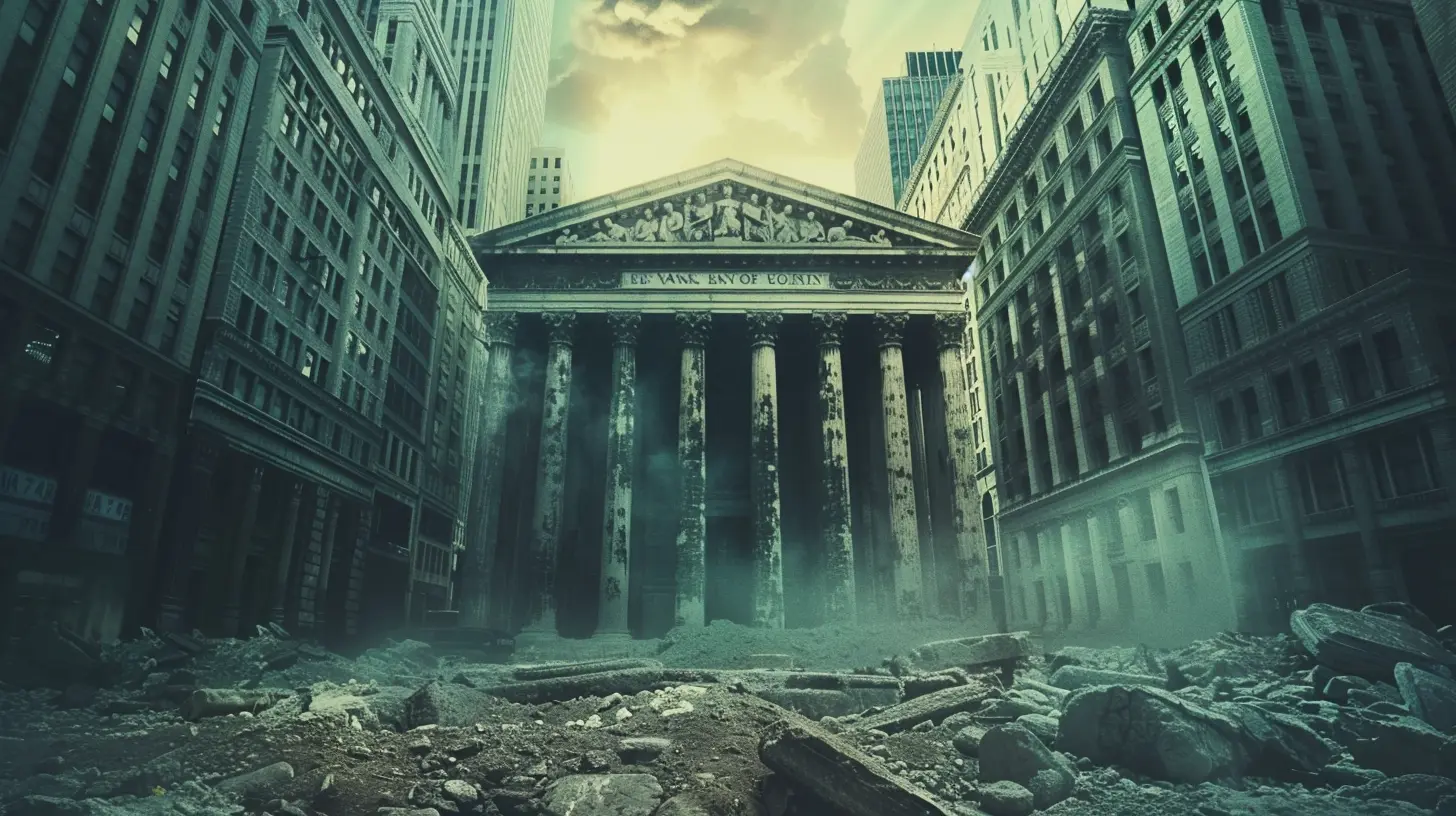
Reimagining Trust: The Heartbeat of Future Banking
Let’s get one thing straight: banking is built on trust. Without it, all the vaults and virtual ledgers are just empty promises.In the aftermath of collapse, people aren’t going to blindly hand their money back to the same old institutions. Nope. This time, they're watching, questioning, and demanding transparency.
Future banking must earn trust like a knight seeking redemption. It needs to be open, fair, and built with the user in mind.
- Expect blockchain to lend its transparency.
- Expect AI to crunch the numbers with zero bias.
- Expect peer-to-peer systems to feel more personal and less corporate.
A new code is being written—one transaction at a time.
Digital First, Physical Fading
Let’s be honest. When was the last time you walked into a bank branch?In this post-collapse world, the future of banking is as digital as it gets. Fueled by necessity and sustained by convenience, the era of marble floors and velvet ropes is fading fast—like VHS tapes in the age of streaming.
Mobile-first banking isn’t the future—it’s the baseline.
We're talking apps that act like financial concierges. Predictive savings, AI investment advisors, real-time budgeting—it’s like having a banker in your pocket who actually listens.
And with the rise of remote work, digital nomads, and borderless trade, traditional boundaries are losing their grip. Banks of the future need to be everywhere... and nowhere.
Centralized vs Decentralized: A Tipping Scale
Ah, the age-old battle: centralization versus decentralization.In the old world, big vaults meant big power. But after collapse, people are rethinking who they want holding the keys. Central banks are still clinging to control, printing money like it’s confetti. But digital currencies—especially decentralized ones like Bitcoin and Ethereum—are making serious waves.
We’re watching a tug-of-war unfold:
- Governments want regulation—and with good reason.
- Citizens want freedom—from fees, from oversight, from fragility.
So, what’s the middle ground? Hybrid models might be the answer. Imagine a financial system where your money lives on the blockchain but still gets FDIC protection. That’s the kind of marriage we might see down the line.
The Rise of Neobanks: Born from the Rubble
Enter the neobanks—those slick, app-based platforms without physical branches or legacy baggage. Think of them as the rebels of finance, raised by the collapse and powered by code.These digital-first banks are:
- Light on fees
- Heavy on functionality
- Intuitive enough for your grandma to use
But here’s the kicker—they’re not just mimicking old banks in a new shell. They’re rethinking banking from the ground up. That means:
- Gamified savings challenges
- Round-up investment tools
- Friendlier UI than your favorite social app
After the dust settled, consumers didn’t just want their money back. They wanted control. Neobanks gave it to them, wrapped in sleek UX and instant access.
Financial Inclusion: No More Gatekeepers
One silver lining of the collapse? It exposed just how many people the old system left behind.Billions—yes, billions—of people were “unbanked.” No access to savings. No credit history. No digital trail.
But new systems? They’re not built for the few. They're global, borderless, and often decentralized. And that means inclusion is no longer a dream—it’s becoming a default.
Future banking will be like Wi-Fi—available, accessible, and expected.
With biometric authentication, mobile access, and blockchain IDs, the barriers are falling.
No proof of address? No problem.
No credit score? Alternative data has your back.
This time around, everyone gets a seat at the table.
AI and Automation: The Invisible Bankers
Here’s a hot take: your next financial advisor might not even be human.And that’s not a bug—it’s a feature.
Artificial Intelligence is already transforming banking. From fraud detection to personalized savings plans, these algorithms are faster, smarter, and—bonus—never go on vacation.
But will this mean fewer jobs?
Maybe. But it’ll also mean fewer mistakes, faster service, and potentially fairer practices (if programmed ethically). That’s a big “if,” though. We have to make sure ethical AI becomes the backbone—not the afterthought—of future finance.
Privacy: The New Currency
In a world where hackers wear hoodies and data breaches are dinner-table news, privacy isn’t optional—it’s essential.Post-collapse banking will need to handle privacy like sacred greenbacks. Iron-clad encryption, decentralized identities, and user-consent policies will be non-negotiable.
Because in the future, your data is your real wallet.
And guess what? People are finally waking up to that fact. They’re asking questions. They’re reading the fine print. And they’re ditching platforms that play fast and loose with personal data.
Banks of tomorrow won’t just safeguard money—they’ll guard identities.
Crisis-Proofing Future Banks
If the past has taught us anything, it’s that the future won’t be smooth sailing. Pandemics, climate change, political instability—all curveballs waiting to be thrown.That’s why future banking must be:
- Agile 🌀
- Resilient 🌐
- Redundant 🔁
Imagine banks with built-in crisis protocols, decentralized backups, and real-time audits. Systems that adjust on the fly, taking hits but staying upright. Like financial judo.
And when the next collapse comes (because it will), these new banks won’t stumble the way the old giants did. At least, that’s the hope.
Community Is the New Currency
Here’s a surprising twist: the future of banking might look a lot like the past.Remember when banks knew your name? When trust was local, and loans were personal?
There’s a movement back towards that. Community-based finance, cooperative lending, and peer-driven micro-investments are bubbling up through the cracks.
People are rediscovering that money isn’t just about digits on a screen—it’s about relationships.
So maybe, just maybe, the future of banking will feel more human—even if it’s powered by algorithms.
A Final Thought: Rebuilding, Not Repeating
We stand at a turning point. The collapse cleared the table. Now we get to rebuild.Will we mimic the old systems and repeat the same mistakes? Or will we shape something more fair, more resilient, more inclusive?
Banking doesn’t have to be boring. It can be poetic. It can be powerful. It can be personal.
The future isn’t written yet—but one thing’s clear:
It’s not in vaults. It’s in vision.
TL;DR: Key Takeaways
- Trust is banking’s true currency. In the aftermath of collapse, it's got to be earned.- Physical branches are fading. Digital-first, mobile-native banking is the new norm.
- Decentralized finance (DeFi) will challenge the old guard, but hybrid systems may hold the key.
- AI and automation are revolutionizing everything, from credit scoring to fraud detection.
- Privacy and data protection will define trustworthy banks.
- Community-driven models and financial inclusion will shape banking for all.
- Resilience and adaptability will be the survival skills of tomorrow’s financial systems.
all images in this post were generated using AI tools
Category:
Financial CrisisAuthor:

Uther Graham
Discussion
rate this article
2 comments
Marissa Nguyen
Navigating finance post-collapse feels daunting, but hope and innovation persist!
December 8, 2025 at 11:32 AM
Uther Graham
Thank you for your insightful comment! Indeed, while challenges abound, hope and innovation will be key to rebuilding a resilient financial landscape.
Karina Bryant
This article insightfully explores how economic collapse reshapes banking, emphasizing digital transformation, regulatory changes, and the need for adaptive risk management strategies in the future.
December 5, 2025 at 3:40 AM
Uther Graham
Thank you for your thoughtful comment! I'm glad you found the article insightful. The evolving landscape of banking is indeed crucial as we navigate these changes.